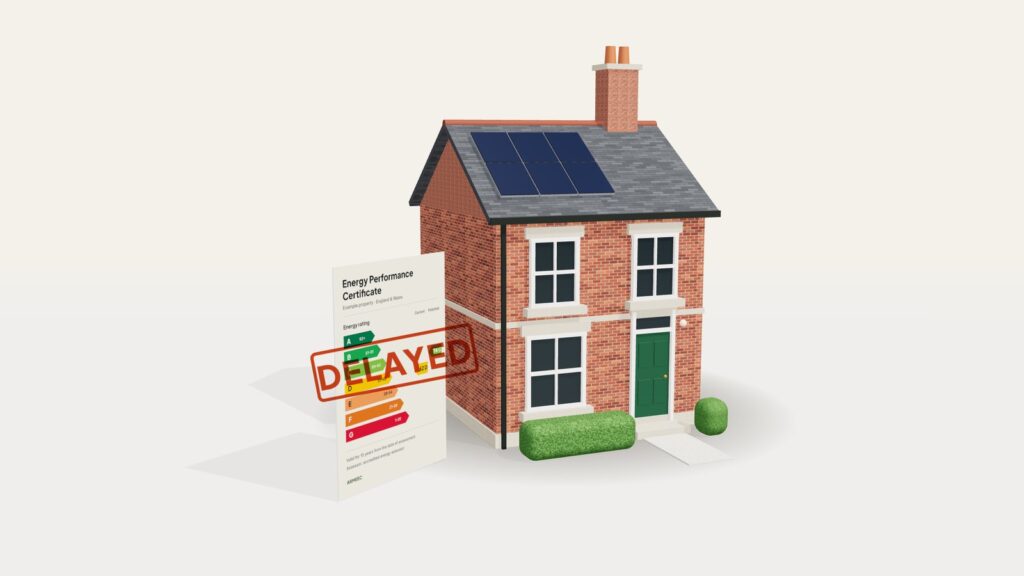
If you had October 2026 circled as the month EPCs would change, you can rub it out. The new Energy Performance Certificate, the one built on the government’s Home Energy Model, was meant to launch this month. It won’t now arrive until the second half of 2027.
For most landlords and homeowners, that’s welcome news. You get more time to plan, your existing certificate stays as it is, and there’s no new system to get your head around just yet. But the delay doesn’t change everything, and the part it doesn’t change is the part that matters most if you let property.
Here’s what has been delayed, what hasn’t, and what we’d suggest doing in the meantime.
The short version
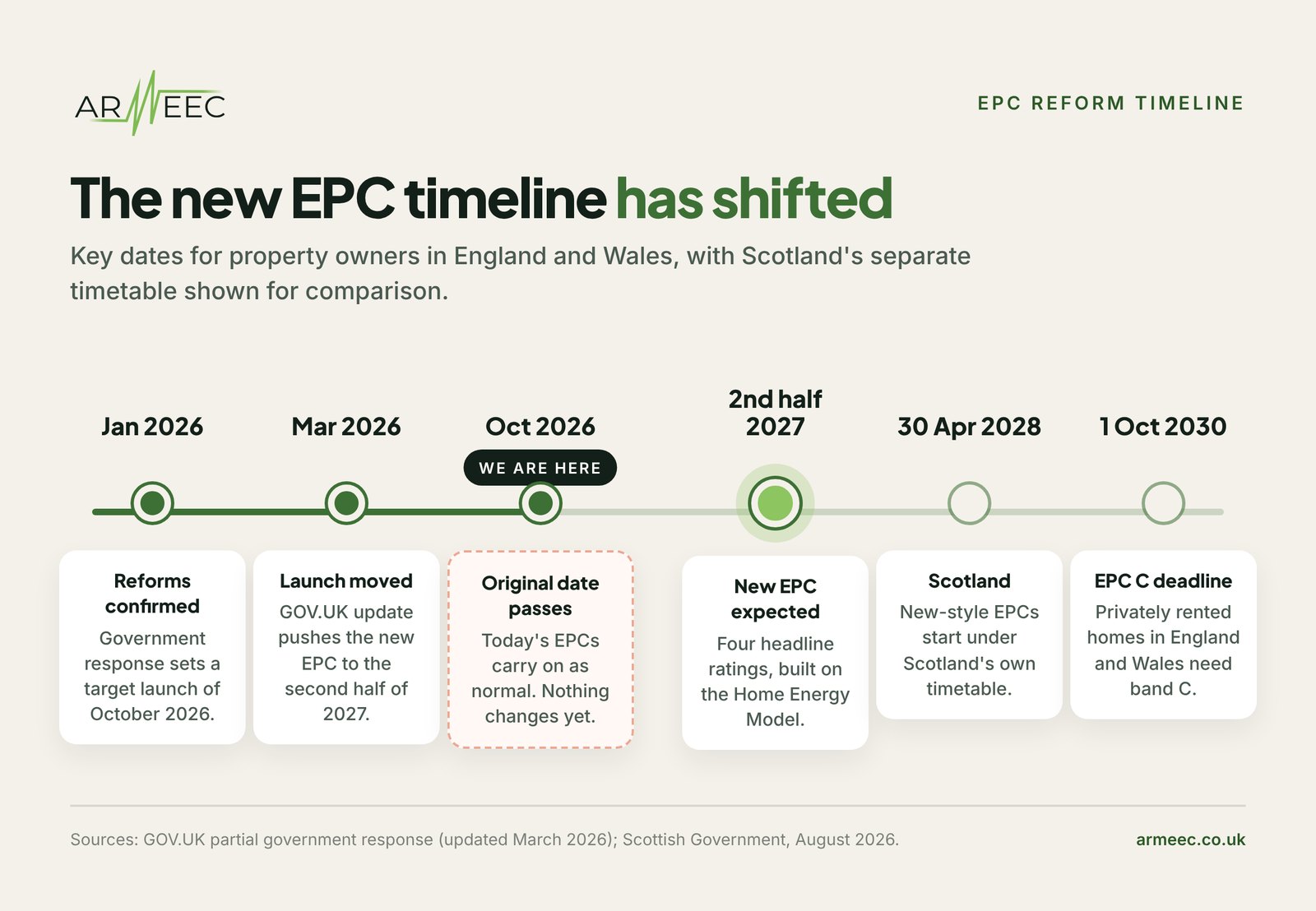
- The new EPC was due in October 2026. It’s now expected in the second half of 2027, and no exact date has been published yet.
- Your current EPC is still valid for its full 10 years.
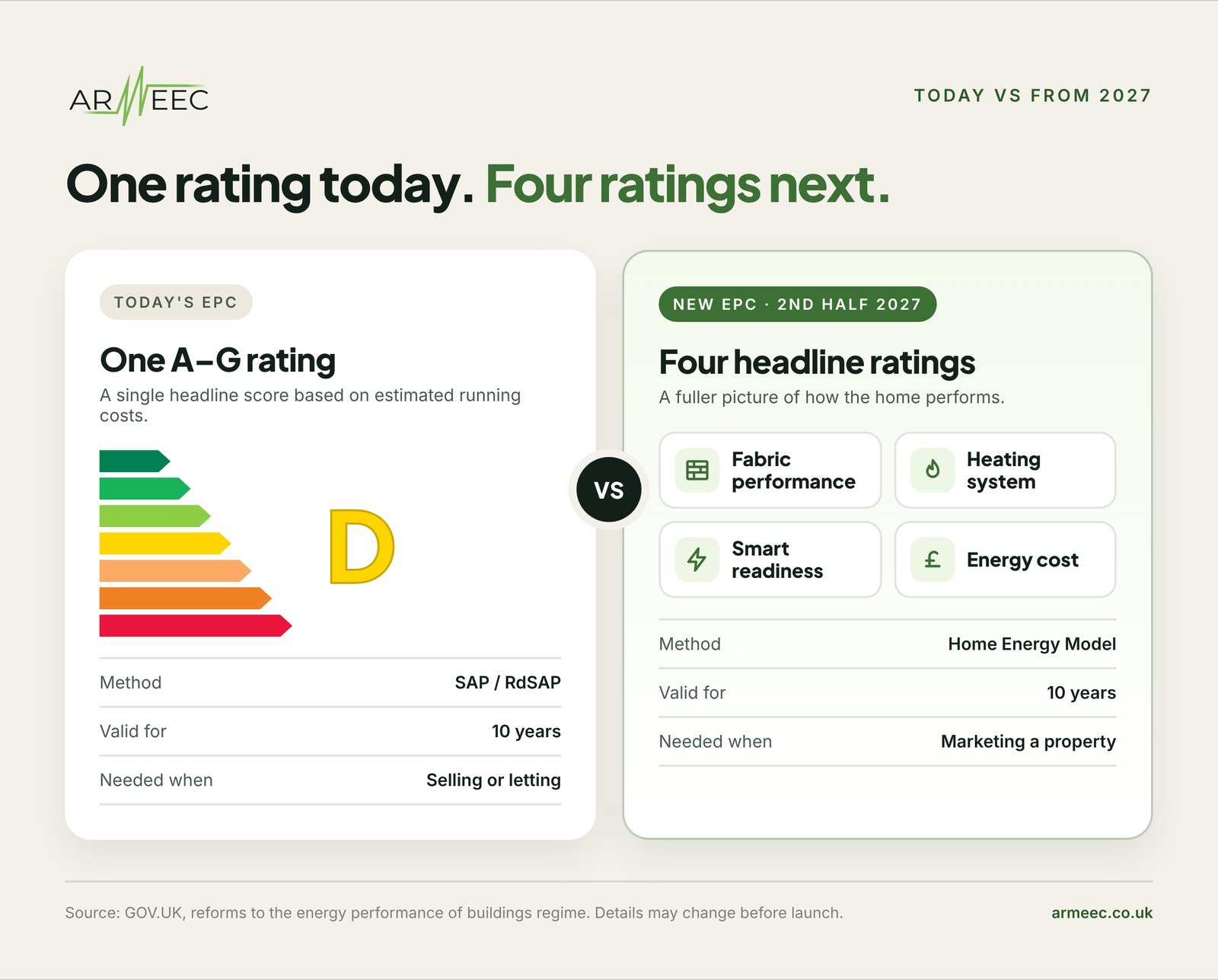
- When it launches, the new EPC will show four headline ratings instead of one.
- The target for privately rented homes in England and Wales to reach EPC C by 1 October 2030 hasn’t moved.
- Insulation and other fabric upgrades are worth doing now. They help under today’s EPC and under the new one.
Why was October 2026 the date?
In January 2026, the government published its response to the consultation on reforming the energy performance of buildings regime. It confirmed the biggest overhaul of EPCs since they were introduced, with a target launch of October 2026.
Alongside the new rating system, the reforms included a handful of practical changes: an EPC will be needed when a property is first marketed (not just by the time it’s sold or let), short-term lets will need one, single-room HMO lets will need one, and listed and heritage buildings will lose their blanket exemption.
When is the new EPC coming in?
In March 2026, the government updated that response and confirmed it had “decided to move the launch of the reforms to the second half of 2027.” It said it would agree a new launch date and an implementation plan with the industry and the devolved governments.
At the time of writing, in late October 2026, no exact go-live date has been published. So the second half of 2027 is the best guide we have for England and Wales.
Scotland is on its own timetable. In August 2026 the Scottish Government confirmed that its new-style EPCs will come into force on 30 April 2028, with a one-year transition during which existing certificates can still be used for sales and lets.
Why has the new EPC been delayed?
The government hasn’t pinned it on one reason, but the industry picture is fairly clear. A change this big needs every domestic energy assessor retrained, a revised qualification, a finished Home Energy Model methodology, and approved software that can produce the new certificates. Elmhurst Energy, one of the main accreditation schemes, had already described the October 2026 timeline as “optimistic but unrealistic.”
Rushing it would have risked inconsistent or inaccurate certificates. When an EPC rating can decide whether you’re allowed to let a home, nobody wants that.
Is my current EPC still valid?
Yes. An EPC is valid for 10 years from the date of assessment, and the delay doesn’t change that. The reforms keep the 10-year validity period too, so a certificate issued today will run its full term.
You don’t need a new EPC just because the system is changing. You’ll need one when your current certificate expires and you want to sell or let, or if you’ve made improvements and want your rating to reflect them. Not sure when yours runs out? You can look it up for free on the GOV.UK EPC register.
What will be different about the new EPC?
The headline change is that one A–G rating becomes four:
- Fabric performance: how well the walls, roof, floors and windows keep heat in.
- Heating system: how efficient and low-carbon your heating and hot water are.
- Smart readiness: whether the home can work with smart controls, batteries, EV charging and flexible tariffs.
- Energy cost: the estimated running cost, which is the closest thing to today’s rating.
Behind the scenes, the Home Energy Model will replace SAP and RdSAP as the method used to produce domestic EPCs. We’ve explained each of the four ratings in more detail in our guide to the new EPC metrics.
Does the delay change the EPC C by 2030 deadline?
No, and this is the bit landlords shouldn’t miss.
Right now, a privately rented home in England and Wales needs an EPC of at least E, unless a valid exemption is registered. In January 2026, the government confirmed that the minimum will rise to EPC C by 1 October 2030, for both new and existing tenancies, with a spending cap of £10,000 per property. Qualifying work carried out from October 2025 counts towards that cap. The regulations still have to be laid, but that is the date to plan around.
Delaying the new EPC doesn’t move that deadline. If anything, it squeezes it. If the new system goes live late in 2027, that leaves roughly three years under it before October 2030. Our guide on what landlords must do for EPC C by 2030 goes through the rules in full.
Should you wait for the new EPC before making improvements?
Our honest view: not for fabric work.
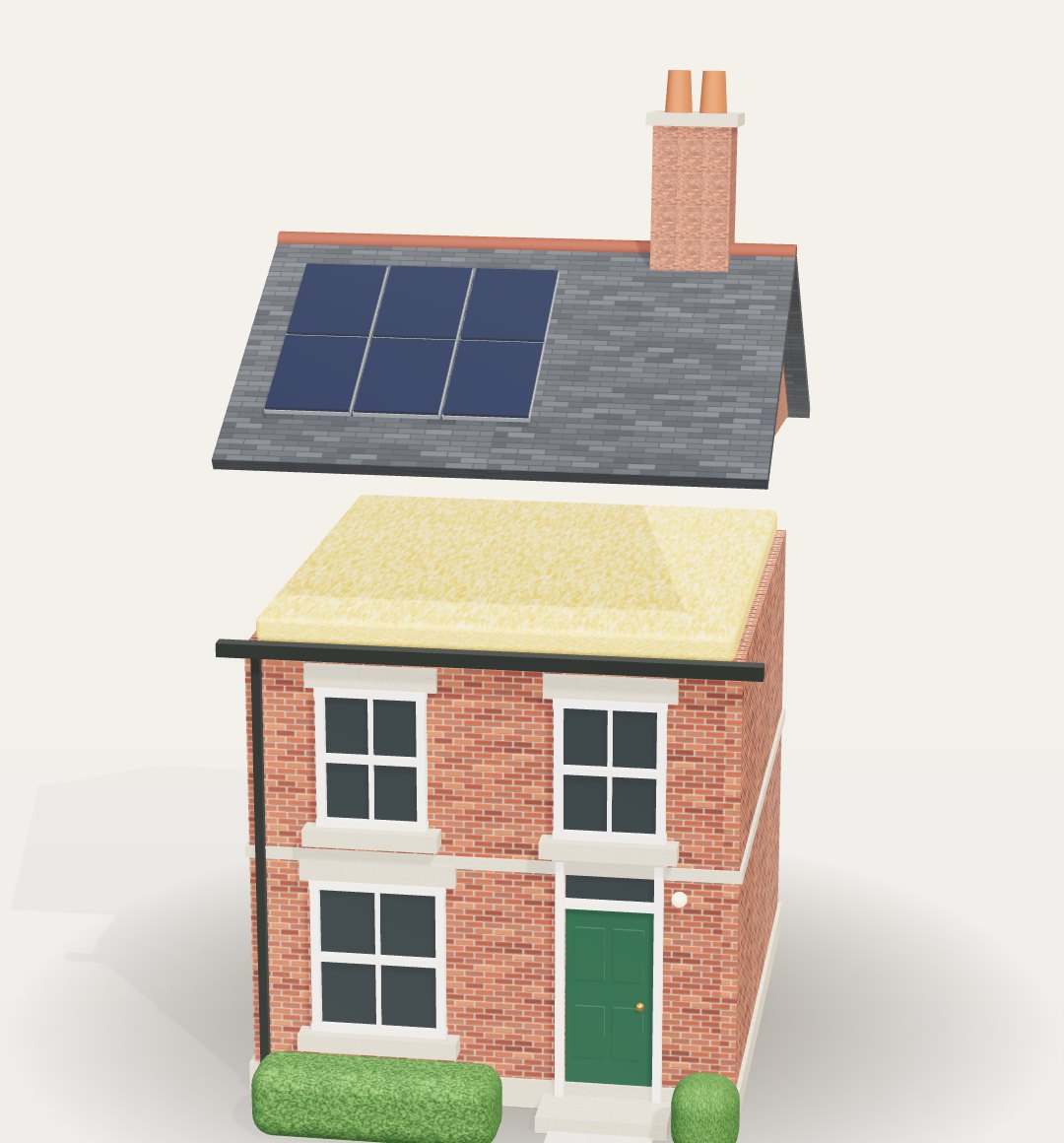
Loft, wall and floor insulation, better glazing and draught-proofing all improve your rating under today’s EPC. They’re also exactly what the new fabric performance rating measures. Whatever happens to the method, a warmer, better-insulated home will score better than a draughty one.
Heating is more nuanced. The new method may treat some systems, particularly gas boilers, differently from today’s, so it’s worth getting advice before you replace a heating system purely to chase an EPC score.
Timing matters as well. If thousands of landlords leave their upgrades until 2029, they’ll all be competing for the same installers and assessors at the same time. Spreading the work over the next few years is usually cheaper and much less stressful. It’s also worth knowing that the 0% VAT on insulation, heat pumps and solar panels ends on 31 March 2027. We’ve explained what the VAT change means for landlords.
What to do now: a five-step checklist
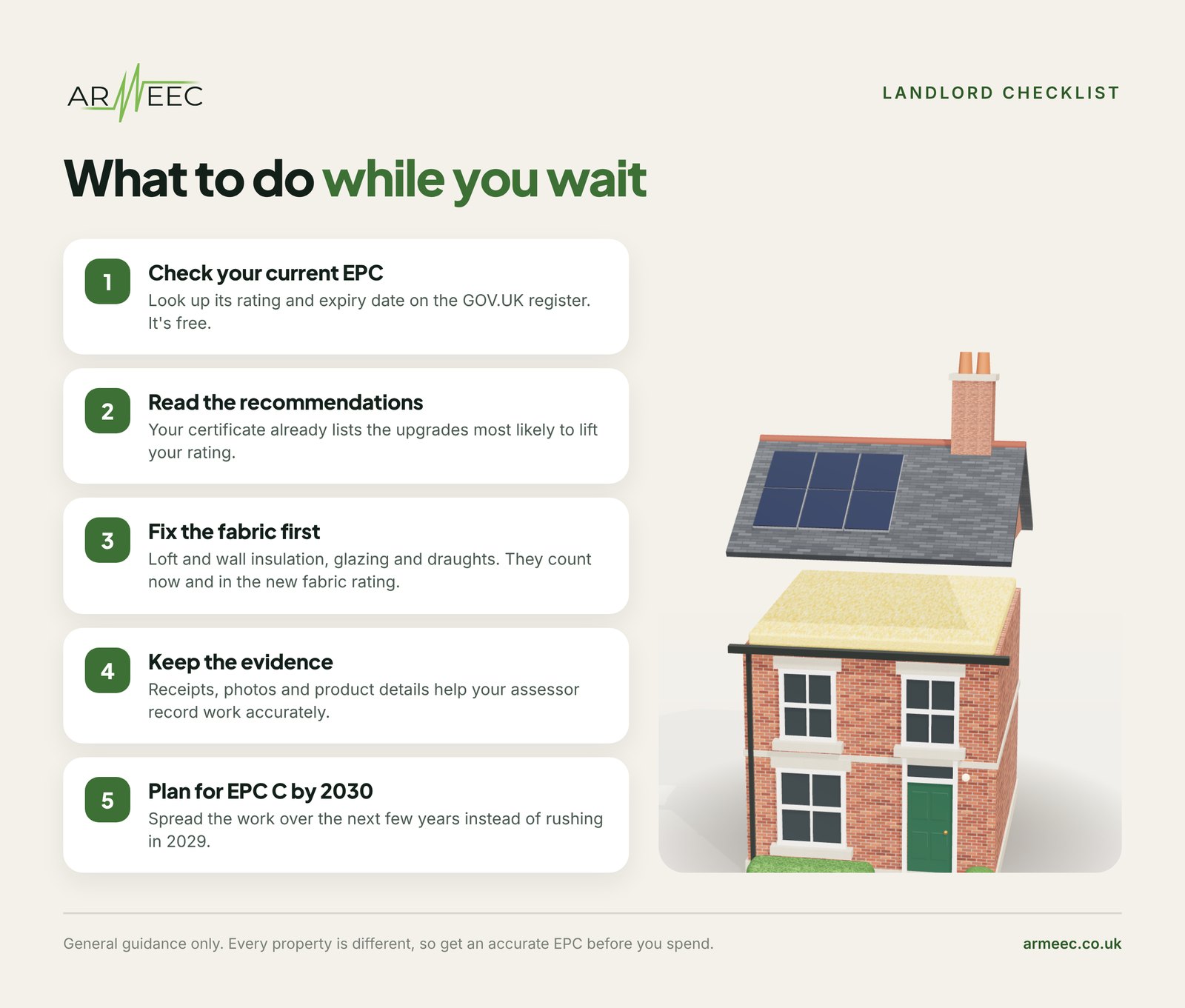
- Check your current EPC. Look up the rating and expiry date on the GOV.UK register.
- Read the recommendations. Your certificate already lists the upgrades most likely to lift your rating.
- Fix the fabric first. Insulation, glazing and draughts count now and under the new fabric rating.
- Keep the evidence. Receipts, photos and product details help your assessor record the work accurately. Without them, assessors often have to use default assumptions.
- Plan for EPC C by 2030. Map out the work over the next few years rather than rushing at the end.
The bottom line
The delay is breathing space, not a pause button. Your current EPC is fine, the new one is coming in the second half of 2027, and the 2030 target for rented homes is unchanged. The landlords who come out of this best will be the ones who use the extra time to get their properties in shape.
If you’re not sure where your property stands, ARMEEC can help. Our Elmhurst-accredited assessors carry out EPCs across London and the UK, and we’ll explain exactly which improvements would make a difference. Get a free, fixed-fee quote and we’ll come back to you within 24 hours.
Frequently asked questions
When is the new EPC coming in?
In England and Wales, the new EPC is expected in the second half of 2027. It was originally planned for October 2026. No exact launch date had been published at the time of writing. In Scotland, new-style EPCs are due on 30 April 2028.
Do I need a new EPC because of the changes?
No. Your existing EPC stays valid for 10 years from the date it was issued. You only need a new one when it expires and you want to sell or let, or if you want it to reflect improvements you’ve made.
Will my EPC rating change under the new system?
It might. The new EPC uses a different method and shows four ratings instead of one. The energy cost rating is the closest match to today’s score, but some homes could see different results. We won’t know for certain until the new system is live.
Has the EPC C by 2030 deadline been delayed too?
No. The government’s target for privately rented homes in England and Wales to reach EPC C by 1 October 2030 hasn’t changed. Only the launch of the new certificate has moved.
What counts as a fabric improvement?
Anything that improves the building itself rather than the appliances in it: loft, wall and floor insulation, double or triple glazing, better doors and draught-proofing.
Sources: GOV.UK, Reforms to the energy performance of buildings regime: partial government response (updated March 2026); Scottish Government, Energy Performance Certificate reform updates (August 2026); Elmhurst Energy (March 2026). This article is general guidance, not legal advice.