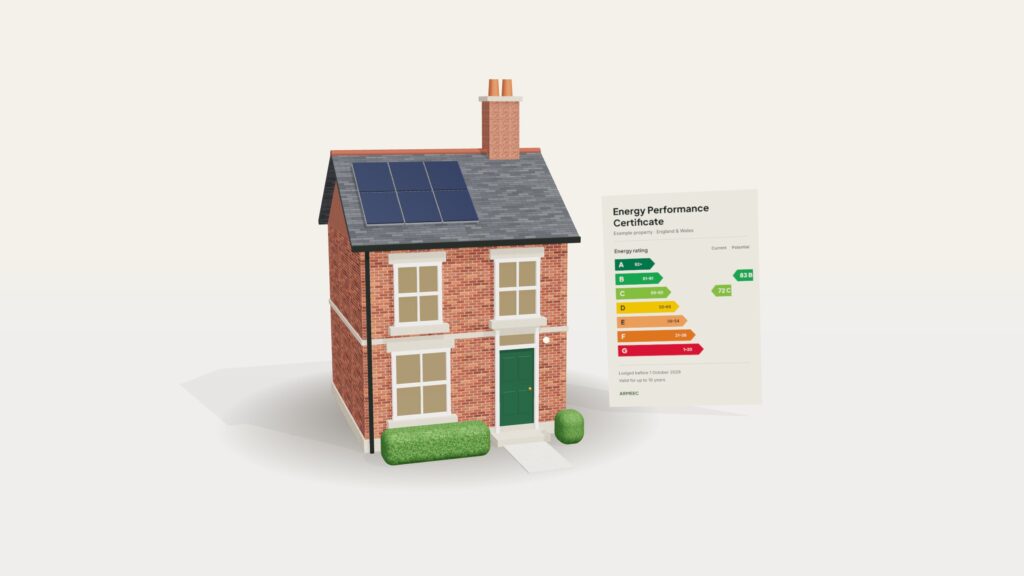
Most landlords have one date in their diary: 1 October 2030, when privately rented homes in England and Wales need to reach EPC C. But there’s an earlier date that could matter even more, and a lot of landlords haven’t heard of it.
Under the government’s plans, if your rental gets a C on today’s EPC rating before 1 October 2029, it would count as meeting the new standard until that certificate expires. Because an EPC lasts up to ten years, that could keep a property compliant until 2039. Here’s how it works, who it helps, and what to do about it.
The short answer
- Privately rented homes in England and Wales need to meet the EPC C standard by 1 October 2030.
- A home that shows C or above on the current A to G rating, on an EPC lodged before 1 October 2029, would be treated as compliant until that certificate expires or is replaced.
- EPCs last up to 10 years, so a C lodged in 2029 could carry a rental to 2039.
- Homes without a C by the cut-off would be judged on the new EPC tests: fabric performance, plus heating system or smart readiness.
- The policy is confirmed, but the regulations aren’t in force yet.
What is the EPC C 2030 rule for landlords?
In January 2026, the government confirmed that the minimum energy efficiency standard for privately rented homes will rise from E to C from 1 October 2030. You can read the detail in the government response on improving the energy performance of privately rented homes.
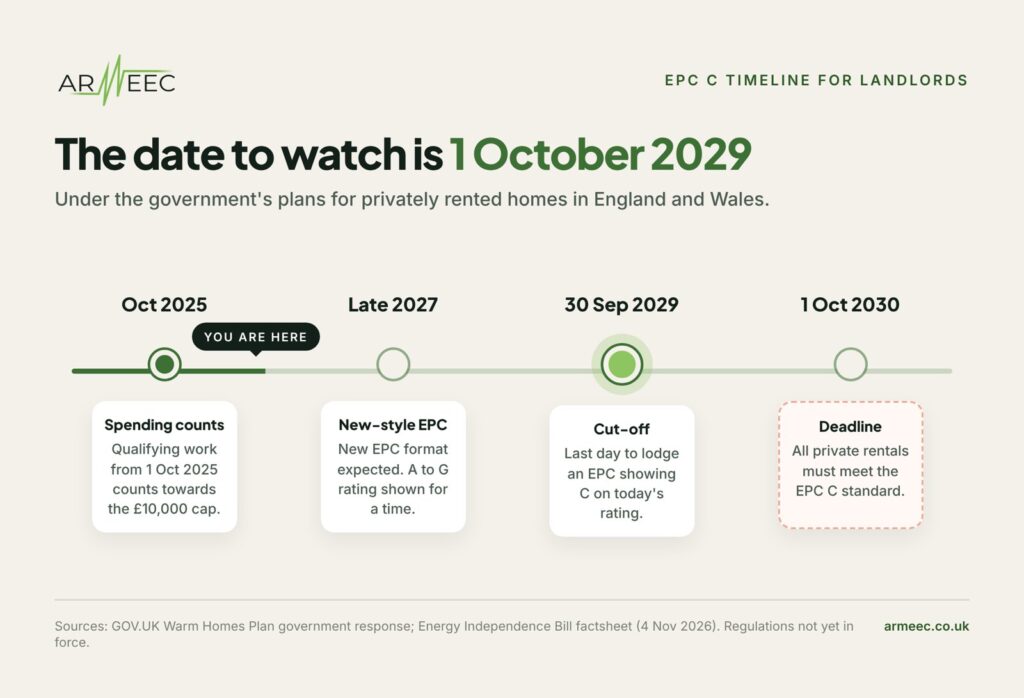
There’s one deadline for every tenancy, new and existing. Spending is capped at £10,000 per property, and qualifying work carried out from 1 October 2025 counts towards it. Our guide on what landlords must do for EPC C by 2030 covers the cap in more detail.
It’s a big job for the sector. The NRLA estimates that around three million privately rented homes are currently rated D or below.
The 1 October 2029 cut-off explained
The EPC itself is changing. A new-style certificate is expected from late 2027, and the 2030 standard will eventually be judged on new metrics rather than the single A to G score we use today. We explained what’s coming in the new EPC metrics explained, and why the new EPC has been delayed to 2027.
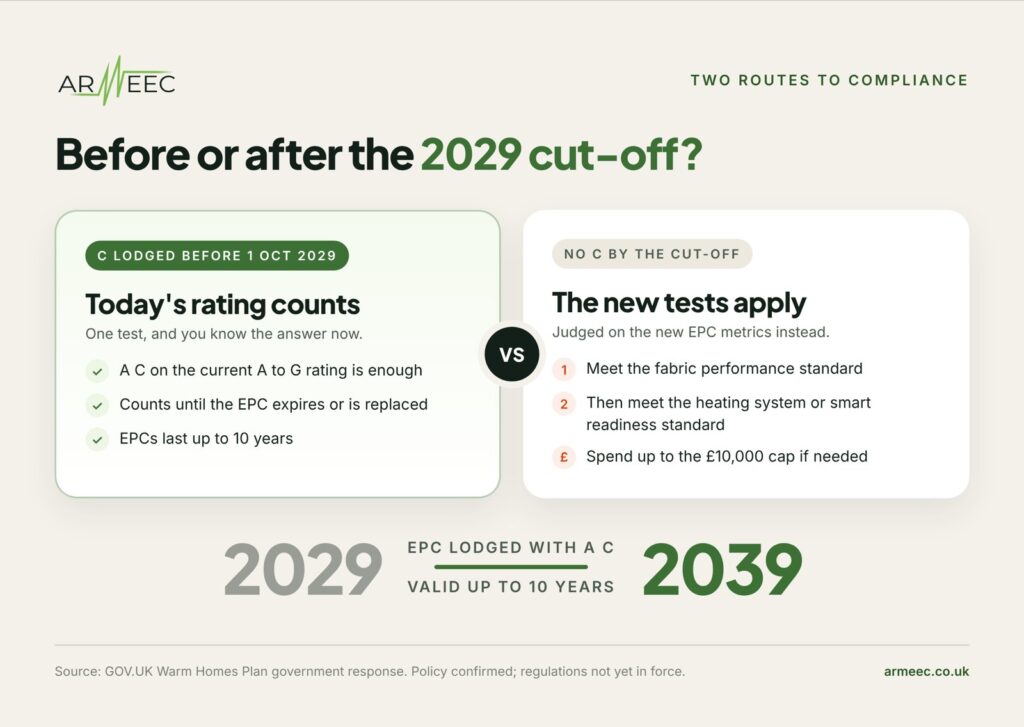
To make the switch fairer, the government has built in a transition. If a privately rented home scores C or higher on the Energy Efficiency Rating (the familiar A to G score) on an EPC lodged before 1 October 2029, it would be recognised as compliant with the higher standard until that EPC expires or is replaced.
In plain English: get a C on today’s system before the cut-off, and you won’t need to worry about the new tests until that certificate runs out.
How long would a C rating protect you?
A domestic EPC is valid for up to ten years. So the protection lasts as long as the certificate does:
- An EPC showing C lodged in 2026 would run until 2036.
- An EPC showing C lodged in September 2029 would run until 2039.
One thing to watch: the protection ends if the certificate is replaced. If you commission a new EPC later and it scores lower, or uses the new metrics, the new certificate is the one that counts.
What if your property isn’t a C by October 2029?
Then it would be assessed against the new EPC standard instead. Under the government’s plans, landlords would need to:
- Meet a fabric performance standard, which looks at how well the building holds heat (insulation, glazing and airtightness).
- Then meet either a heating system standard or a smart readiness standard.
The £10,000 cap still applies, and exemptions will be available where a property can’t reach the standard within it. But it’s a more complicated test, and there’s less certainty about how individual properties will score.
Should you act early?
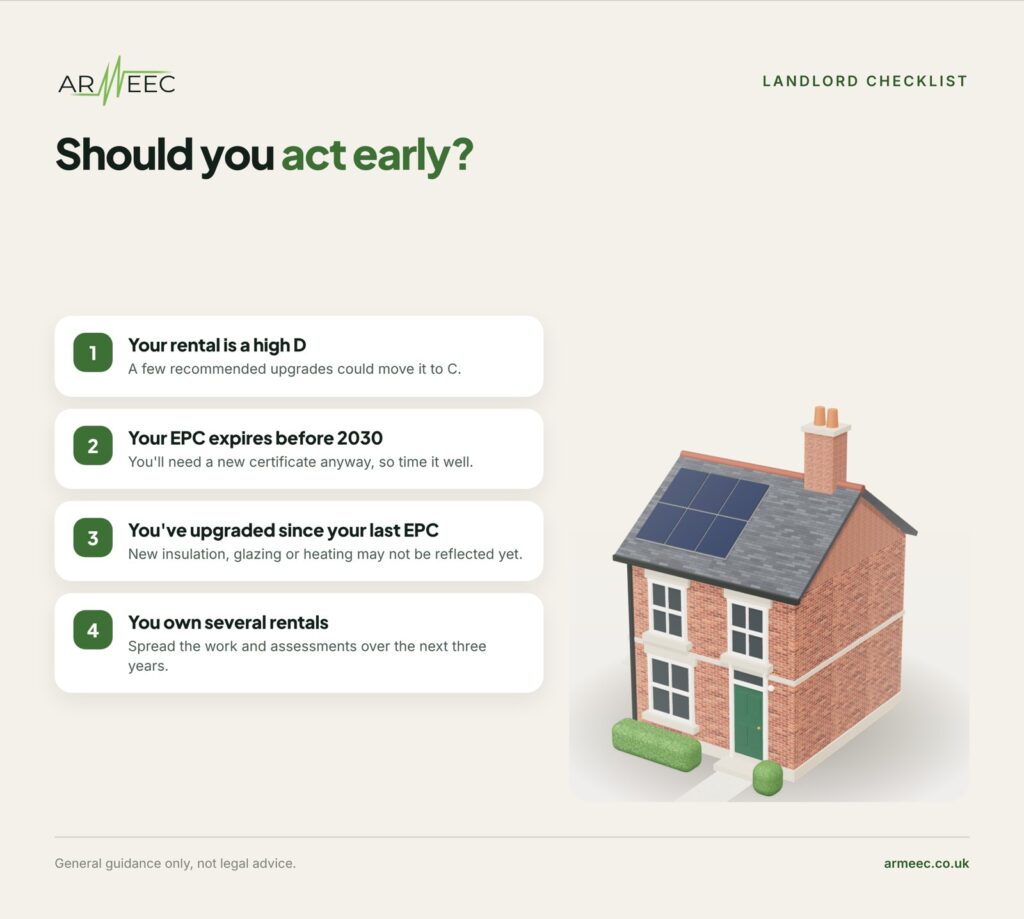
Not every landlord needs to rush. But acting before 2029 makes sense if:
- Your rental is a high D. A few of the improvements on your EPC could be enough to tip it into C.
- Your EPC expires before 2030. You’ll need a new one anyway, so it’s worth timing the work and the assessment together.
- You’ve made upgrades since your last EPC. New insulation, windows or heating may not be reflected in your current rating.
- You own several rentals. Spreading the work over the next few years is easier than doing it all in 2029, when assessors and installers are likely to be busy.
There’s also a cost angle. The 0% VAT rate on insulation, heat pumps and solar panels ends on 31 March 2027, and the Energy Independence Bill could see EPC fines rise to £30,000.
What to do now
- Check every EPC you hold. Look up the rating, score and expiry date on the GOV.UK EPC register. It’s free.
- Find the ones closest to C. A D rating with a score in the mid to high 60s is often within reach.
- Read the recommendations. Your certificate lists the improvements most likely to raise the rating, with rough costs.
- Do the work, then get re-assessed. Book a new EPC once improvements are finished, well before the 2029 cut-off.
- Keep records. Save invoices and certificates for every job, as they count towards the £10,000 cap.
How ARMEEC can help
ARMEEC’s Elmhurst-accredited assessors carry out EPCs across London and the UK. We’ll tell you where your property stands today, which improvements would move it to C, and when to book your re-assessment. Get a free, fixed-fee quote and we’ll come back to you within 24 hours.
Frequently asked questions
What happens if my rental gets EPC C before October 2029?
Under the government’s plans, a privately rented home that shows C or above on the current A to G energy efficiency rating, on an EPC lodged before 1 October 2029, would be treated as meeting the new standard until that certificate expires or is replaced.
How long is an EPC valid for?
A domestic EPC is valid for up to 10 years from the date it is lodged. So an EPC showing C that is lodged in 2029 could keep a rental compliant into 2039, as long as it isn’t replaced by a newer certificate.
Is my current EPC C enough for 2030?
It depends on when it was lodged and when it expires. A C on the current rating, lodged before 1 October 2029, would count until it expires. If it expires before 2030, or you replace it, the property would need a new EPC at that point.
What if my property isn’t a C by the 2029 cut-off?
It would be judged on the new EPC metrics instead. Landlords would need to meet a fabric performance standard and then either a heating system or a smart readiness standard, with spending capped at £10,000 per property.
Is the 1 October 2029 rule law yet?
Not yet. The government confirmed the policy in January 2026, but the regulations still have to be made. The details could change, so it’s worth keeping an eye on official updates.
Sources: GOV.UK, Improving the energy performance of privately rented homes: government response (21 January 2026); GOV.UK, Energy Independence Bill factsheet (4 November 2026); NRLA (11 November 2026). This article is general guidance, not legal advice.