If you’re working on a new build, conversion, or major renovation in the UK, there’s a good chance someone’s already mentioned SAP calculations to you — or they will soon. And if you’re not entirely sure what that means, you’re not alone.
SAP stands for Standard Assessment Procedure, and it’s the government-approved method for measuring the energy performance of new residential buildings. It sounds complicated, but the basics are surprisingly straightforward once you break it down.
This guide covers what SAP calculations actually involve, when you need them, what they’re used for, and how to get them done without the headaches.
What Are SAP Calculations?
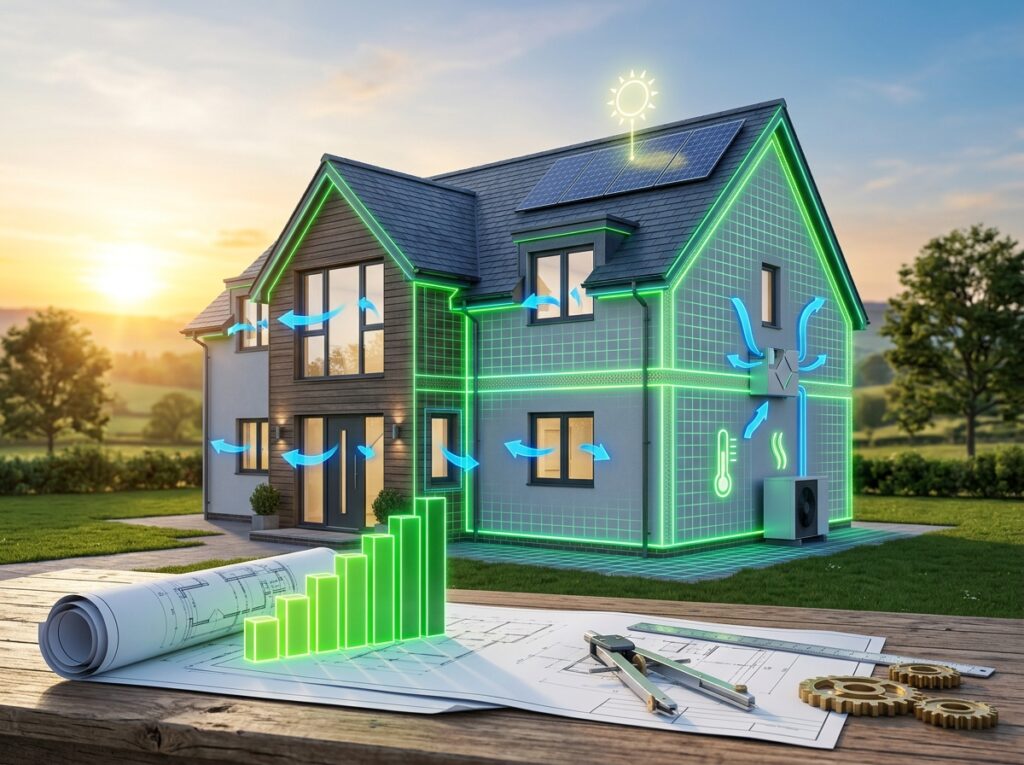
SAP calculations are an energy assessment specifically designed for new and newly converted residential properties. They measure how much energy a home is likely to use based on factors like:
- Insulation levels (walls, roof, floor)
- Window and door specifications (U-values)
- Heating system type and efficiency
- Ventilation and air tightness
- Renewable energy sources, where applicable
The output is a SAP score — a number between 1 and 100+ that reflects the energy efficiency of the building. The higher the score, the more efficient the property.
Here’s the thing: SAP isn’t just an optional check. It’s a legal requirement under Part L of the Building Regulations for virtually all new dwellings and residential conversions.
Why Are SAP Calculations Required?
The UK government introduced Part L to reduce carbon emissions from new housing. Approved Document L sets out the energy efficiency standards that all new homes must meet. SAP calculations are the tool used to demonstrate compliance.
In practice, this means:
- At planning stage (Design SAP / Predicted Energy Assessment): You’ll need an early SAP calculation to show the proposed building meets the required standards. This is often submitted with your planning application or Building Regulations notice.
- At completion (As-Built SAP / Final EPC): Once the property is built, a final SAP calculation confirms that the actual construction matches the design intent. This is used to generate the Energy Performance Certificate (EPC) that you’ll need before the property can be sold or let.
Both stages are important, and missing either can cause real problems with Building Control sign-off.
Do You Need SAP Calculations?
If you’re developing, building, or significantly converting a residential property in the UK, almost certainly yes. Specifically, you’ll typically need SAP calculations for:
- New build houses and flats
- Conversions (e.g. barn conversions, office-to-residential)
- Extensions where the extension itself requires an EPC
- Self-build projects
- Properties going through planning where energy compliance must be demonstrated
Architects and project managers usually arrange for SAP calculations as part of their service — but developers and self-builders often instruct a specialist SAP assessor directly. Either way, it’s worth getting this sorted early. Leaving it too late can delay Building Control and push back your practical completion.
If you’re unsure whether your specific project requires SAP calculations, our SAP calculations service page explains the full scope — or just give us a call and we’ll tell you within minutes.
What’s the Difference Between SAP and SBEM?
Good question. SAP (Standard Assessment Procedure) applies to residential buildings. SBEM (Simplified Building Energy Model) is the equivalent for commercial properties.
So if you’re building a house or converting a property into flats, you need SAP. If you’re developing an office block, retail unit, or mixed-use building with commercial elements, you’re likely looking at SBEM. Some projects need both.
How Much Do SAP Calculations Cost?
SAP calculation costs vary depending on the complexity and size of the project. For a standard new build house, you can generally expect to pay somewhere in the range of £150–£400 for a full set of design and as-built SAP calculations — though prices vary by assessor and project scope.
Some things that affect price include:
- Number of dwelling types (a development with 20 identical units costs less per unit than 20 bespoke designs)
- Whether you need design SAP, as-built SAP, or both
- How complete your drawings and specifications are
- Turnaround time required
One thing worth knowing: going with the cheapest option isn’t always the best move. An error in your SAP report can cause real problems at Building Control stage. It’s worth working with an accredited assessor who knows Part L inside out.
What Information Do You Need to Provide?
To carry out SAP calculations, your assessor will need fairly detailed information about the proposed building. This typically includes:
- Architectural drawings (floor plans, elevations, and sections)
- Construction specifications (wall build-ups, U-values)
- Window and door schedules
- Details of the heating system (boiler type, controls, hot water system)
- Ventilation strategy
- Any renewable or low-carbon technologies being installed
The more complete your information, the more accurate the calculations — and the faster you’ll get your report back.
What Comes After SAP Calculations?
Once your project is complete and a final SAP assessment has been carried out, the results are used to lodge a new build domestic EPC on the government register. This EPC is what you (or your solicitor) will need to provide when selling or renting the property.
Building Control will also want confirmation that the as-built SAP passes before they issue a Completion Certificate. So it’s not just a box-ticking exercise — it’s a genuine prerequisite for getting the sign-off you need to move the project forward.
How Long Do SAP Calculations Take?
At ARMEEC, we typically deliver SAP calculations within 3–5 working days of receiving full project information. If you’re working to a tight programme, let us know — we can often accommodate faster turnaround where needed.
If your drawings are still evolving, we can often start with preliminary information and update as the design is finalised. Getting us involved early tends to make things smoother.
Frequently Asked Questions
- Do I need SAP calculations if I’m extending an existing property? Not necessarily for the extension alone — but if you’re converting an existing building into a new dwelling (e.g. converting a large house into flats), then yes, SAP calculations are required. Standard domestic extensions have different requirements. Speak to an assessor to confirm what your specific project needs.
- Can my architect do the SAP calculations? Some architects with the relevant accreditation can, but most projects use a specialist energy assessor. Your architect may have someone they work with regularly, or you can instruct an accredited assessor directly.
- What happens if my SAP calculation fails? It’s not a pass/fail exactly — if the initial calculations show the design doesn’t meet Part L requirements, the assessor will flag what needs to change (e.g. improving insulation, upgrading the heating system). The calculations can be resubmitted once the design is updated.
- Can I use the same SAP calculation for planning and Building Regulations? You’ll need a design-stage SAP (Predicted Energy Assessment) for planning, and then a separate as-built SAP for Building Regulations completion. They’re related but not the same document.
- Is SAP required for commercial buildings? No — commercial buildings use SBEM instead. If your development includes both residential and commercial elements, you’ll likely need both.
- What does Part L 2021 change? Part L 2021 (which came into force in England in June 2022) significantly tightened energy efficiency requirements for new homes. The upshot is that new builds now need to be meaningfully more efficient than the previous standard. If your project was designed before Part L 2021 came in, it’s worth checking whether your specifications still comply.
Need SAP Calculations for Your Project?
Whether you’re at early design stage or approaching practical completion, ARMEEC can handle your SAP calculations accurately and efficiently. We’re Elmhurst-accredited and Part L 2021 compliant, with experience across new builds, conversions, and mixed-use developments across the UK.
Head over to our design and planning services page or request a free quote and we’ll come back to you within 2 hours.