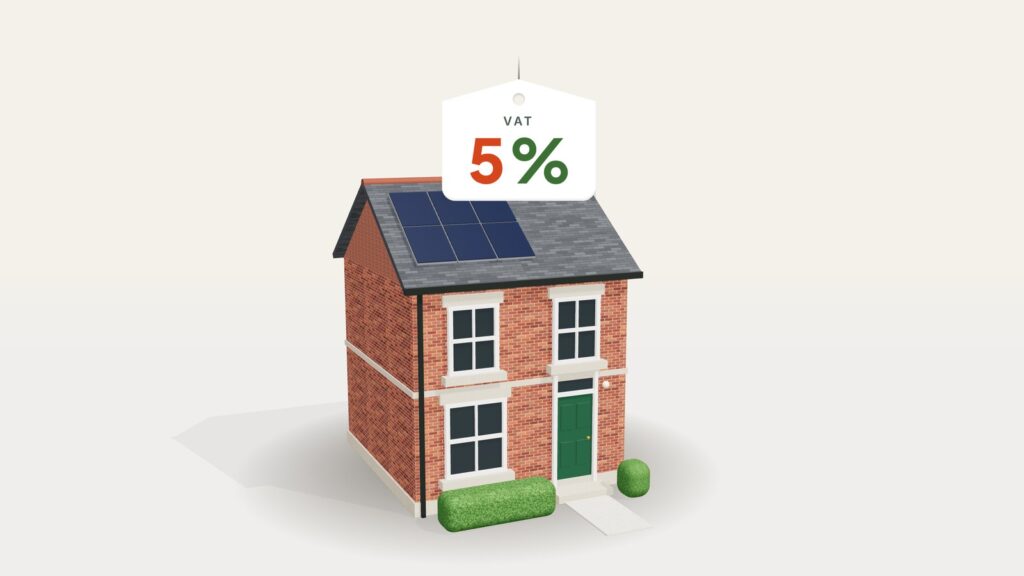
If you’ve been thinking about insulation, a heat pump or solar panels, there’s now a clear deadline. The 0% VAT rate on installing energy-saving materials in homes ends on 31 March 2027. From 1 April 2027, the same work will carry 5% VAT.
That was confirmed around the Budget on 28 October 2026, which also cut £1 billion from Warm Homes Plan grant funding and set a smaller budget for the Boiler Upgrade Scheme. For landlords working towards EPC C by 2030, the timing of upgrades just became a lot more important.
Here’s what’s changing, what it could cost you, and how to plan your upgrades sensibly.
The short answer
- Until 31 March 2027: 0% VAT on installing insulation, heat pumps, solar panels, batteries and other energy-saving materials in homes.
- From 1 April 2027: the rate goes back to 5%. On a £10,000 job, that’s £500 more.
- Grants are shrinking: £1 billion has been cut from Warm Homes Plan grant funding, and the Boiler Upgrade Scheme budget for 2027–28 is £400 million, not the £600 million planned.
- Timing matters: for jobs that run past 1 April, the VAT rate can depend on when the work is finished and invoiced.
- Start with an EPC: it shows which upgrades will actually lift your rating, so you spend on the right ones.
When does 0% VAT on energy-saving materials end?
The 0% rate was introduced on 1 April 2022 as a temporary relief. According to the House of Commons Library, it is set to last until 31 March 2027, and on 1 April 2027 the rate returns to 5%. The Budget did not extend it.
5% isn’t the full 20% standard rate, but it’s still a real increase on work that most landlords are planning anyway.
What counts as an energy-saving material?
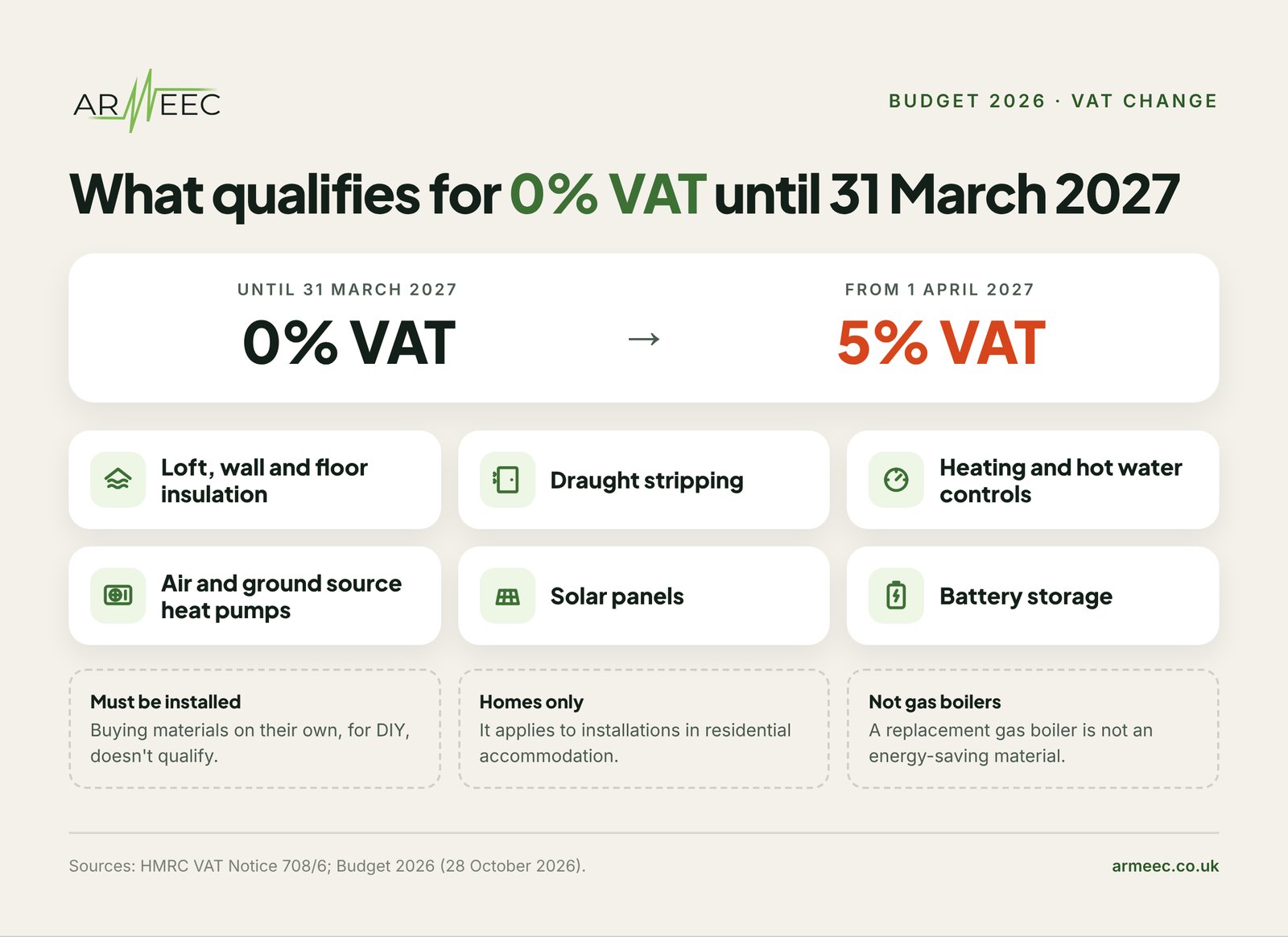
HMRC’s VAT Notice 708/6 sets out which materials qualify. The ones most relevant to landlords and homeowners are:
- Loft, wall and floor insulation
- Draught stripping for windows and doors
- Controls for central heating and hot water systems
- Air source and ground source heat pumps
- Solar panels
- Battery storage (added to the relief from February 2024)
Three conditions are easy to miss. The materials have to be installed by the supplier, so buying insulation for a DIY job doesn’t qualify. The installation has to be in residential accommodation. And a replacement gas boiler isn’t an energy-saving material, so it doesn’t qualify either.
Does it apply to landlords and rented homes?
Yes, in most cases. The relief applies to installations in residential accommodation, and a privately rented home is residential accommodation. So if you’re a landlord insulating a loft or fitting a heat pump in a buy-to-let, the 0% rate should apply in the same way as it would for a homeowner.
If you let property through a limited company, or you’re VAT-registered, it’s worth checking how this affects you with your accountant.
How much more will upgrades cost from April 2027?
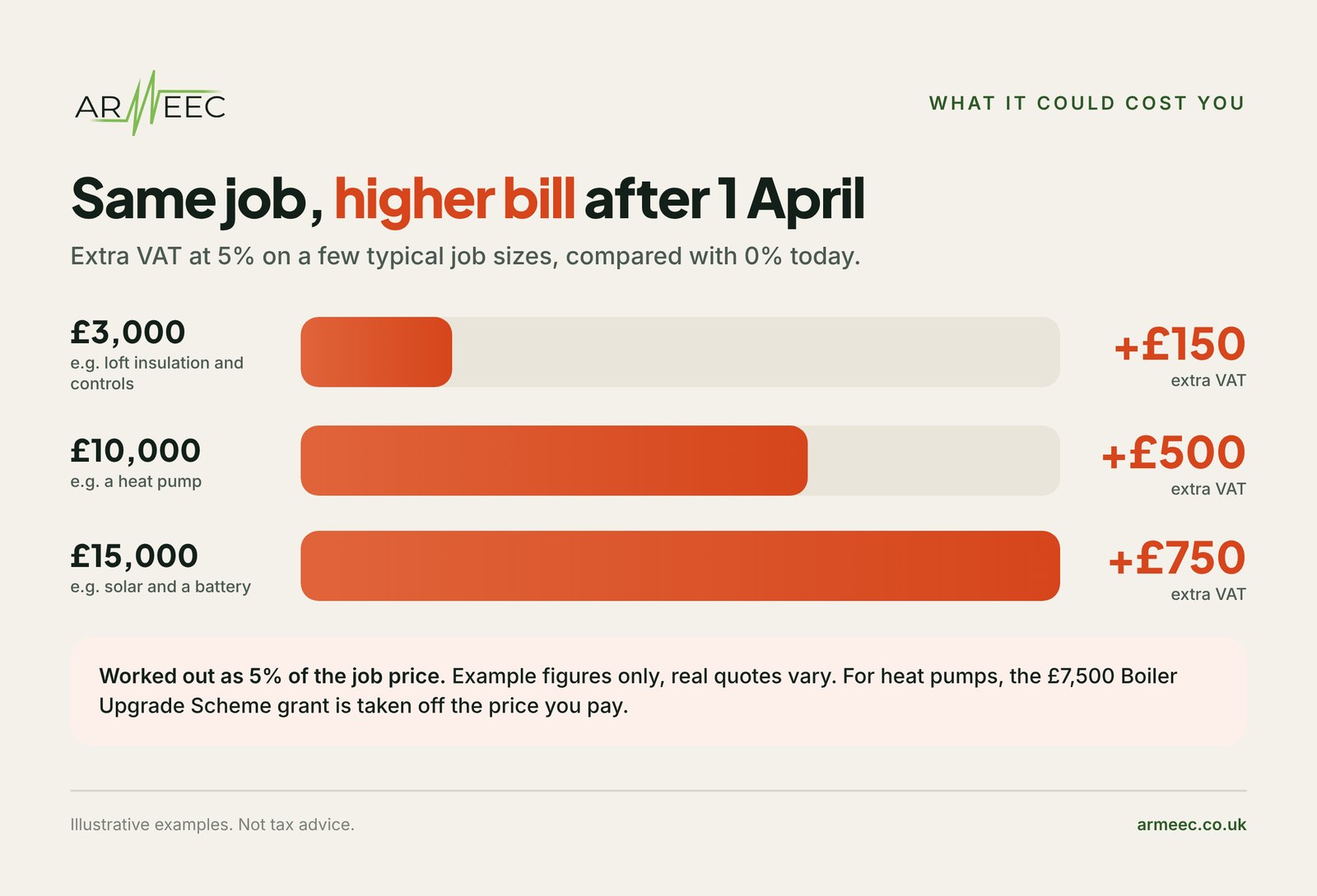
The extra cost is simply 5% of the price of the job. A few examples:
- A £3,000 job (for example, loft insulation and heating controls) would cost £150 more.
- A £10,000 job (for example, a heat pump) would cost £500 more.
- A £15,000 job (for example, solar panels with a battery) would cost £750 more.
These are examples rather than quotes, and real prices vary from property to property. If you have several homes to upgrade, the difference adds up quickly.
What else did the Budget change?
The VAT change wasn’t the only energy-efficiency news. According to coverage of the 28 October Budget:
- Warm Homes Plan: £1 billion of capital grant funding has been cut. The Treasury says most funding for low-income households and social housing is protected.
- Boiler Upgrade Scheme: the grant stays at £7,500 for a heat pump, but the 2027–28 budget is £400 million, not the £600 million planned in January.
- Energy bills: a £100 Household Energy Payment from January 2027 for homes in council tax bands A to D in England, and plans to remove gas standing charges.
What the Budget didn’t change is the EPC timetable. The target for privately rented homes in England and Wales to reach EPC C by 1 October 2030 still stands, and the new-style EPC is still expected in the second half of 2027. We covered that in our guide to the new EPC delay.
Does a deposit lock in 0% VAT?
Not always, and this is where people get caught out. VAT is charged at the rate in force at the tax point, which is usually linked to when the work is finished or when you’re invoiced. A deposit paid before 1 April 2027 may only fix the rate for the deposit itself, not the whole job.
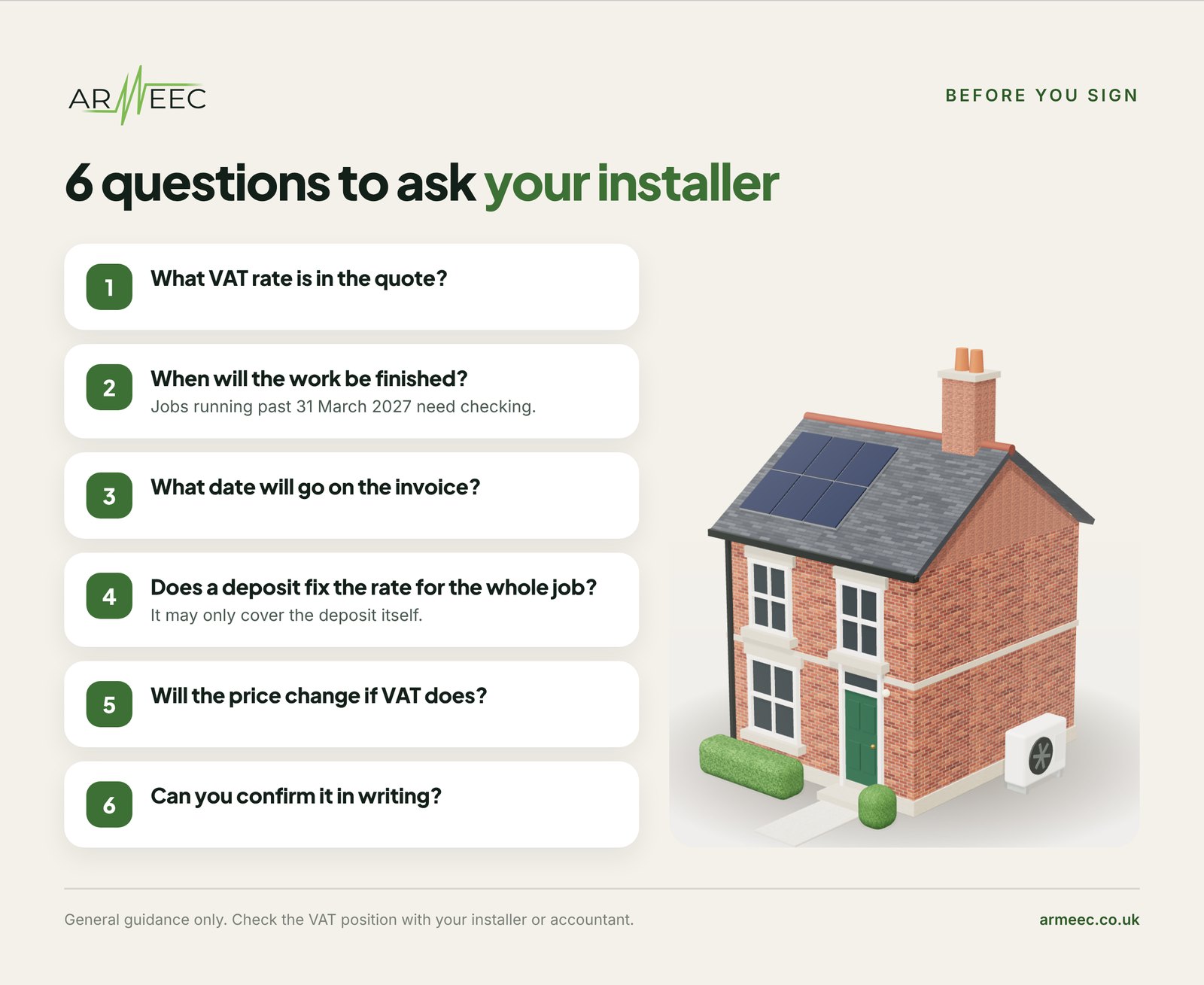
If your project will start in March 2027 or finish close to the deadline, ask your installer these questions before you sign:
- What VAT rate is included in the quote?
- When will the work be finished?
- What date will appear on the invoice?
- Does the deposit fix the VAT rate for the whole job?
- Will the price change if the VAT rate changes?
- Can you confirm the VAT position in writing?
Should landlords rush to upgrade before 31 March 2027?
Our view: plan now, but don’t panic-buy.
The 0% rate is a good reason to bring forward work you were going to do anyway. It isn’t a reason to commit to the wrong upgrade in a hurry. A £500 saving is quickly lost if the work doesn’t improve your EPC much, or if you choose a poor installer because the good ones are booked up.
Installers are likely to get busier as the deadline approaches. If you’re planning a heat pump or solar, getting quotes in the next few months gives you time to compare designs, check what’s included and still finish before 31 March.
Get your EPC first
Before you book any upgrade, check where your property stands. Your EPC lists the improvements most likely to raise your rating, in the order that makes sense for your home. For most landlords chasing EPC C, fabric improvements like loft and wall insulation come first, because they help under today’s EPC and under the new fabric performance rating.
You can look up your current certificate for free on the GOV.UK EPC register. If it’s out of date, or you’ve made changes since it was done, a new assessment will give you an accurate starting point. Our guide on what landlords must do for EPC C by 2030 explains the £10,000 spending cap and how it works.
Key dates at a glance
- 28 October 2026: Budget confirms the 0% VAT relief is not extended.
- January 2027: £100 Household Energy Payment begins in England.
- 31 March 2027: last day of 0% VAT on energy-saving materials.
- 1 April 2027: VAT on energy-saving materials returns to 5%.
- Second half of 2027: new-style EPC expected.
- 1 October 2030: privately rented homes need EPC C.
How ARMEEC can help
ARMEEC’s Elmhurst-accredited assessors carry out EPCs across London and the UK. We’ll tell you which upgrades will make the biggest difference to your rating, so you can book the right work before the VAT changes. Get a free, fixed-fee quote and we’ll come back to you within 24 hours.
Frequently asked questions
When does 0% VAT on energy-saving materials end?
The 0% rate applies until 31 March 2027. From 1 April 2027, installing energy-saving materials in homes will be charged VAT at the reduced rate of 5%.
Does 0% VAT apply to heat pumps, solar panels and insulation?
Yes. Air and ground source heat pumps, solar panels, battery storage, insulation, draught stripping and heating controls all qualify, as long as they are installed in a home by the supplier.
Can landlords get 0% VAT on upgrades to a rented property?
The relief applies to installations in residential accommodation, which includes privately rented homes. If you let through a company or are VAT-registered, check the position with your accountant.
Does paying a deposit before 31 March 2027 lock in 0% VAT?
Not necessarily. A deposit may only fix the VAT rate for the amount of the deposit. The rest of the job can depend on when the work is completed and invoiced, so get the VAT position confirmed in writing.
Is the £7,500 Boiler Upgrade Scheme grant changing?
The grant level stays at £7,500 for heat pumps. The Budget set the scheme’s 2027–28 budget at £400 million, lower than the £600 million planned, so there is less funding to go round.
Sources: House of Commons Library, VAT on solar panels and other energy-saving materials; HMRC VAT Notice 708/6; EPC Advisor, Budget 2026 (28 October 2026); GOV.UK, Boiler Upgrade Scheme. This article is general guidance, not tax advice.